How to write a cold email that people actually answer
The best first emails are short, specific and honest. The five parts of an email that earns a reply, with examples, and the common mistakes to avoid.
· 6 min read
A cold email is a first message to someone who does not know you yet. It has one job: to start a conversation. It does not need to explain everything you do, and it should not try to close a sale. If the reader replies, even with a question, the email has done its work.
This guide sets out what makes a first email worth answering, shows an example, and lists the mistakes that most often cost replies. The same principles guide how Seekpitch writes emails for you.
Start with the reader, not with yourself
Busy people decide in a few seconds whether an email deserves their attention. They are asking themselves one question: is this about me and my business? An email that begins with “We are a leading provider of…” answers that question with a no.
An email that begins with something specific to the reader, such as a recent hire, a new location, or a service listed on their website, shows that you have done your homework and that the message was written for them.
The five parts of a good first email
1. A short, plain subject line
Write the subject line the way you would for a colleague: a few words, lower-key, and related to the reader. Avoid capital letters, exclamation marks and anything that sounds like an advertisement. “Booking at the Leeds clinic” works better than “Transform Your Patient Experience Today!”
2. An opening line about them
Mention one relevant, true detail about the reader's business. It should connect naturally to the reason you are writing. A compliment with no connection to your offer feels like flattery, so make the link clear.
3. The problem you solve, in their words
Describe the problem you help with in one or two sentences, using language the reader would use. Focus on the outcome they care about, such as fewer missed appointments or less time spent on admin, rather than on features.
4. One piece of evidence
Give the reader a reason to believe you: a similar customer, a specific result, or a fact about how you work. One piece is enough. It must be true. If you do not have customer results yet, describe what you do concretely instead of inventing numbers.
5. A small, easy request
End with a question that is easy to say yes to. Asking for thirty minutes of someone's time is a large request from a stranger. Asking whether the topic is relevant, or whether they would like a short example, is a small one.
An example
Here is a first email for a fictional company that sells online booking software to physiotherapy clinics:
It is under one hundred words. It opens with a detail about Sarah's clinic, explains the problem in terms she would recognise, offers a single piece of evidence, and asks a small question.
Mistakes that cost replies
- Writing too much. If an email needs scrolling, it is too long. Aim for fewer than 120 words.
- Talking about yourself first. Your company history and awards can wait until the reader is interested.
- Vague value. Phrases like “improve efficiency” or “drive growth” could describe almost any product. Be specific about what changes for the reader.
- Several questions or links. One clear request gets more answers than three options. Keep links to a minimum, especially in the first email.
- Pretending to know the reader. Avoid fake familiarity such as “Hope you had a great weekend!” or pretending you have met. It undermines trust.
- Exaggerated claims. An invented statistic or customer can ruin your credibility the moment someone checks it.
- Heavy formatting. Images, colours and large logos make an email look like a newsletter. Plain text feels personal.
Personal does not mean long
Many people assume that a personal email needs paragraphs of research. In practice, one well-chosen detail does more than five. The reader needs to see that you understand their situation, and then quickly understand how you can help.
This is also why researching each company matters more than writing clever sentences. A plain email with a genuinely relevant observation will outperform a beautifully written message sent to the wrong person.
Honesty is not optional
Cold email depends on trust, and trust is easily lost. Every claim in your email should be something you could prove if asked. That includes prices, results, customer names and promises about what your product does.
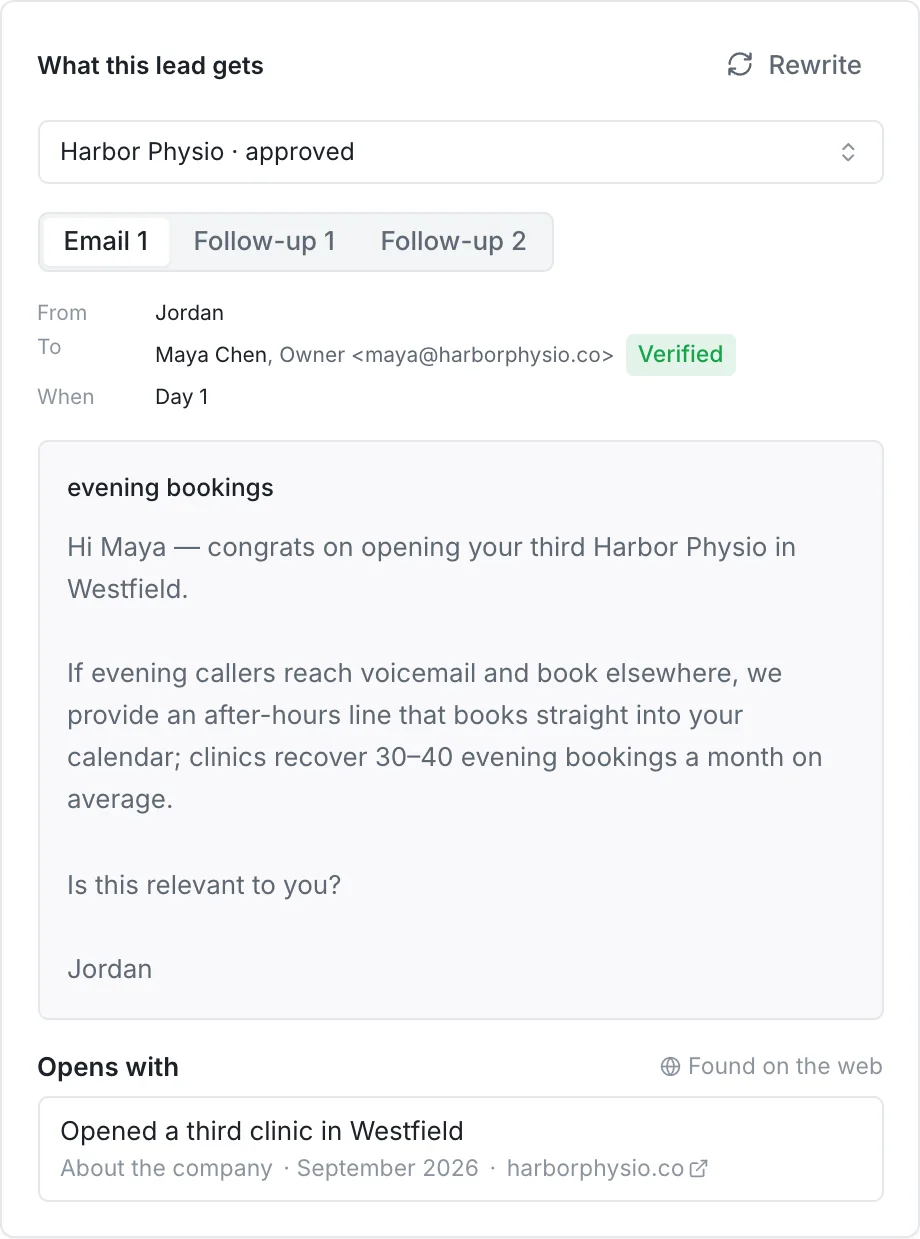
Seekpitch is built around this rule. The emails it writes may only use the facts you have entered under Company & facts in your settings, together with what the agent found on the lead's own website. If a detail is not there, it is not used. When someone asks a question you have not covered, the reply draft says you will check, rather than guessing.
Test, learn and adjust
No email works for every audience. Once you have sent to a few dozen people, look at the replies. Which companies answered? What did they ask? Did several people raise the same concern? Use that to adjust your facts, your examples and the groups you target.
Remember that most replies arrive after the first follow-up, not the first email. Judge a message on the complete sequence. Our guide to follow-up emails explains how to follow up without becoming a nuisance.
A checklist before you send
- Does the first line mention something true and specific about the reader?
- Could the reader explain, after one reading, what you help with?
- Is there exactly one piece of evidence, and is it accurate?
- Is the request small and easy to answer?
- Is the whole email under 120 words, in plain text?
- Would you be comfortable if the reader forwarded it to a colleague?
If you can answer yes to all six, the email is ready. With Seekpitch, you review each first email before it goes out, so you can apply this checklist every time. Make sure your Company & facts are complete, and the agent will do the research and writing for each lead.
Paste your website. Get leads that fit.
Try it free for 7 days with 50 qualified leads. No card needed, and nothing is sent without your approval.