Follow-up emails: how many to send, and when to stop
Most replies to cold email come after a follow-up, not the first message. Here is how to follow up politely, how many times, how far apart, and when to stop.
· 5 min read
Many people send one cold email, hear nothing, and conclude that outreach does not work for them. In reality, silence after a first email rarely means no. Usually it means the reader was busy, saw the message on a phone between meetings, or meant to answer and forgot. A polite follow-up gives them a second chance to respond.
This guide explains why follow-ups matter, how many to send, how far apart, what to write, and when to stop.
Why follow-ups work
People receive dozens or hundreds of emails a day. Even an email that interests them can be pushed down the inbox before they have time to answer. A short follow-up brings the conversation back to the top at a moment when they may have more time.
Follow-ups also show that you are serious and organised. A single message can look like part of a mass mailing. A considered second message shows that a real person is paying attention.
How many follow-ups should you send?
For most businesses, two follow-ups after the first email is the right balance. That makes three messages in total. It is enough to reach people who missed the first email, and it stops before persistence turns into pressure.
Sending five, six or more follow-ups to someone who has never replied rarely helps. It increases the chance that they mark you as spam, which hurts your ability to reach everyone else. Three messages, well spaced, is a respectful sequence.
How far apart?
A gap of about three days between messages works well as a starting point. It is long enough that the reader does not feel chased, and short enough that they still remember the first email.
| Message | When |
|---|---|
| First email | Day 1 |
| First follow-up | About 3 days later |
| Second follow-up | About 3 days after that |
If you sell to people who are often away from their desks, such as clinic owners or tradespeople, you might prefer a longer gap of five to seven days. If your offer is time-sensitive, a shorter gap can make sense. Seekpitch lets you choose the number of follow-ups and the number of days between them for each project.
What to write in a follow-up
A follow-up should be shorter than the first email and add something new. Simply writing “Just checking in” or “Did you see my last email?” gives the reader nothing to respond to. Instead, try one of these approaches:
- Add a new angle. Mention a different benefit, or a different problem you solve, that might be more relevant to them.
- Offer something useful. A short example, a relevant fact or a simple idea they could use, whether or not they buy.
- Make the request even smaller. If the first email asked for a call, the follow-up could ask whether the topic is worth discussing at all.
- Give an easy exit. In the last message, it is courteous to say that you will not write again if the timing is wrong. This often prompts an honest reply either way.
Example of a first follow-up
Example of a final follow-up
Sending follow-ups as replies in the same thread, as above, keeps the earlier message visible and makes the context clear.
When to stop
Stop following up immediately when any of the following happens:
- The person replies, whatever they say. From that moment, it is a conversation, not a sequence.
- They ask not to be contacted, or use the unsubscribe option.
- You receive an out-of-office reply. It is better to wait until they return than to send more messages into an empty inbox.
- The email address does not work. Remove it rather than trying again.
The most common and costly mistake is sending an automatic follow-up to someone who has already replied. It makes the sender look careless and can turn an interested reader into an annoyed one.
How Seekpitch handles follow-ups
Seekpitch writes the follow-ups for each lead along with the first email, so the whole sequence is consistent and personal. By default, it sends two follow-ups three days apart, and you can change both numbers in your settings.
Follow-ups stop the moment a lead replies. To make that possible, Seekpitch reads the replies in your connected mailbox, which is why we recommend filling in the reply settings when you connect a mailbox. Every follow-up is also sent within business hours in the lead's time zone, and within your mailbox's daily limit.
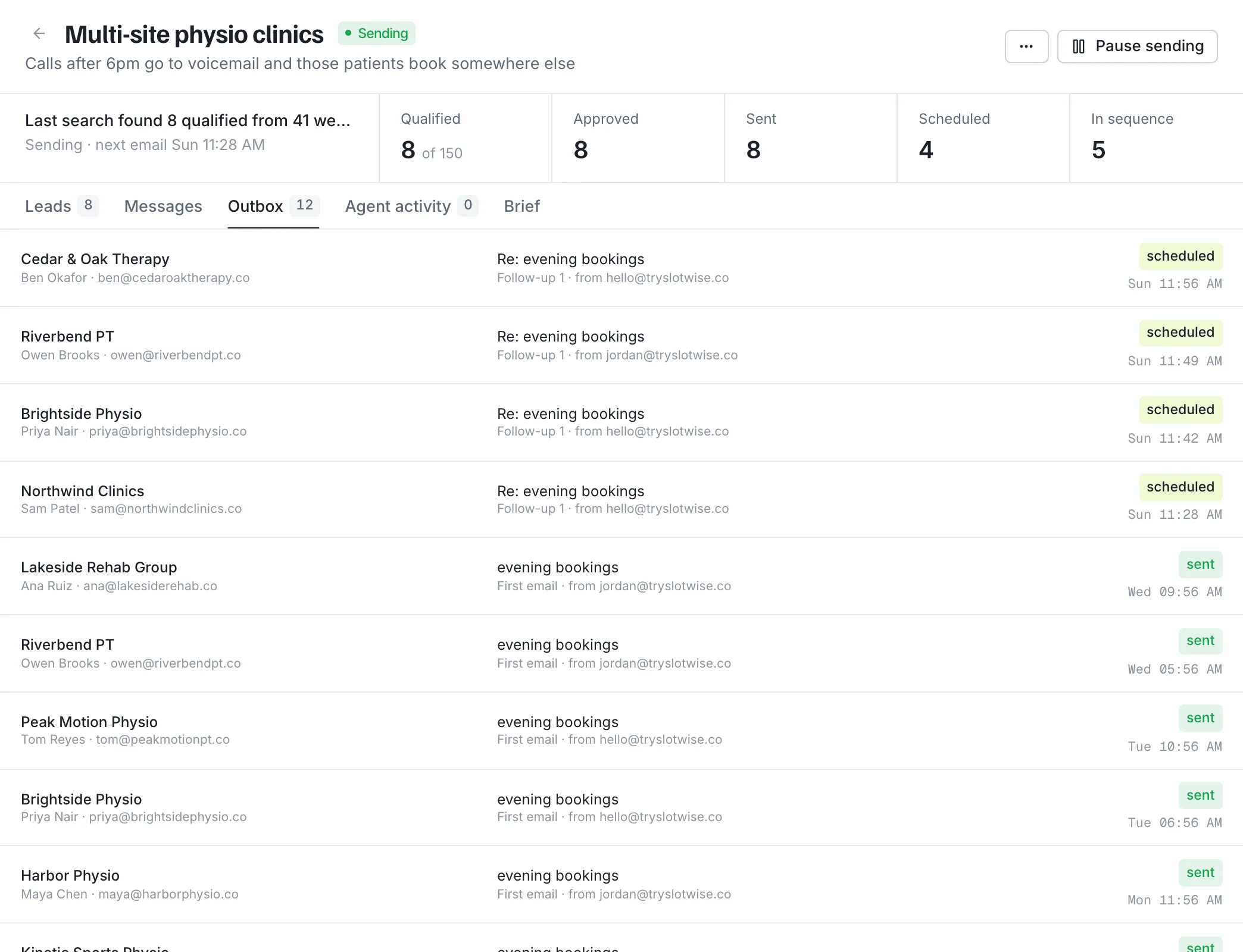
Measuring the whole sequence
When you judge whether a campaign is working, look at replies across the full sequence rather than after the first email alone. A message that receives few immediate replies may perform well once follow-ups have gone out. Give each campaign at least two to three weeks before drawing conclusions.
In summary
- Send two follow-ups after the first email.
- Leave about three days between messages, or longer for busy audiences.
- Keep each follow-up short and add something new.
- Stop as soon as someone replies, opts out or is away.
- Judge results on the whole sequence, not the first email.
Polite persistence is one of the simplest ways to get more replies. If you want the follow-ups written, timed and stopped for you, see what each Seekpitch plan includes.
Paste your website. Get leads that fit.
Try it free for 7 days with 50 qualified leads. No card needed, and nothing is sent without your approval.